Your Ultimate Guide to Yacht Ownership & Crew Costs
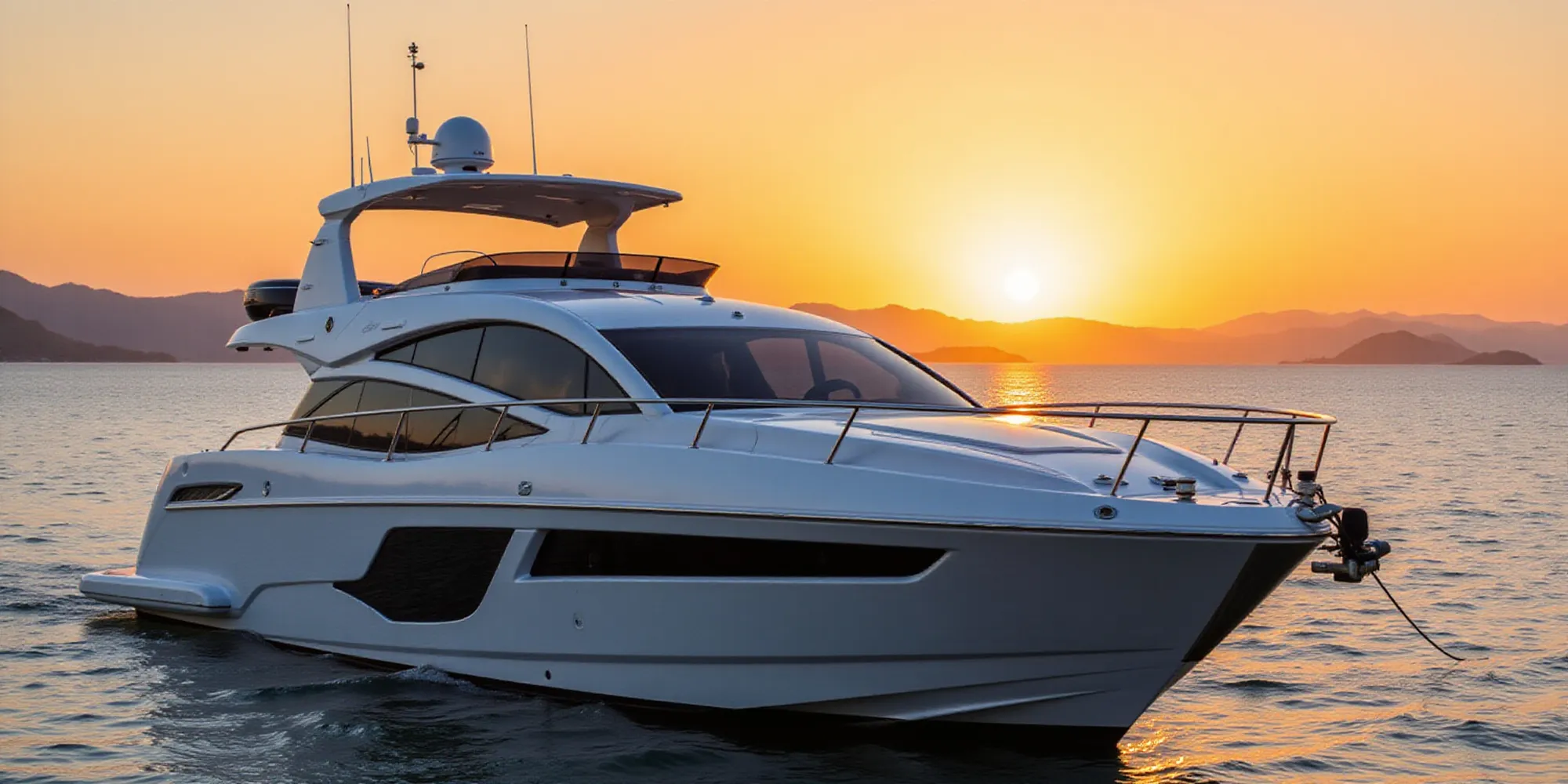
Picture a sunrise painting a sleek yacht’s hull, the sky turning gold like a promise.
We invite you to step into the yacht store, the bridge between dreaming and doing.
Here we map out ownership costs, crew roles, training routes, and FAQs—backed by data.
Ready to set sail on knowledge? Let’s dive in.
The Yacht Store: Where Dreams Meet the Deck
At the heart of every yachting story lies a well‑curated yacht store.
It offers more than listings; it provides a roadmap to ownership and crew careers.
We’ll walk through costs, crew roles, training paths, and answer the burning questions that keep you up at night.
1. Ownership Costs: The Numbers That Matter
Buying a 30‑ft cruiser starts around $200k, while superyachts can exceed $15M.
But the purchase price is just the tip of the iceberg.
Annual operating costs hover at 1–2% of the purchase price, translating to roughly $1,500 a month for a mid‑size yacht.
Maintenance, mooring, insurance, and crew salaries stack up quickly.
Knowing these figures helps you steer clear of financial storms.
2. Crew Roles: From Deckhand to Captain
Crew positions form the vessel’s heartbeat.
A deckhand cleans, handles lines, and greets guests—often the first rung.
The first mate oversees deck operations, while the chief engineer keeps engines humming.
Captains chart courses and command safety.
Each role demands specific certifications; we’ll list them in the next table.
| Position | Core Duties | Certifications | Typical Salary |
|---|---|---|---|
| Deckhand | Cleaning, lines handling, guest service | STCW, Deckhand Certification | $30k–$50k |
| First Mate | Deck operations, maintenance oversight | STCW, First Mate Certificate | $50k–$90k |
| Chief Engineer | Engine house, systems maintenance | STCW, Engineer’s Certificate | $60k–$120k |
| Captain | Navigation, safety, crew management | STCW, Master’s License | $70k–$150k |
3. Training Paths: Turning Passion into Profession
We’ve partnered with top maritime academies to bring you clear pathways.
STCW courses cover safety basics, while specialized programs teach yacht‑specific skills.
Networking at shows like the Monaco Yacht Show opens doors.
A career starts as a deckhand and can climb to senior roles or even captaincy with experience and dedication.
4. FAQs: Your Burning Questions Answered
- How much does it cost to own a yacht? A 50‑ft yacht averages $30k–$40k per year.
- What certifications are required? STCW Basic Safety Training is mandatory; other roles need additional credentials.
- Can you work remotely as a yacht manager? Many firms offer remote scheduling.
- When is the best time to buy? Off‑season deals often bring discounts.
We’re thrilled to guide you through this sea of possibilities.
Ready to chart your course? Download our free career guide or book a consultation with our yacht management experts today.
Remember, every great voyage starts with a single decision—let’s make yours count.
Charting the Waters: The Economics of Yacht Ownership at Your Yacht Store
Ever wondered if a yacht is just a luxury or a living budget? We’ve mapped out the numbers so you can see the real cost without the glossy hype. Think of it as a monthly mortgage, but with a deck and a crew. Ready to dive into the math? Let’s set the scene.
A 50‑ft cruiser usually starts around $200,000, while a 70‑ft cruiser can jump to $500,000. The rule of thumb is 1–2 % of the purchase price each year for upkeep, mooring, insurance, and crew. That translates to roughly $1,500 a month for a 50‑ft yacht. YachtWorld reports average operating costs hover around 1.5 % for mid‑size vessels. Knowing this helps you budget like a pro. Owners often add a small crew to handle daily chores.
Mooring fees range $200–$600/month depending on marina, while insurance sits at 0.5–1 % of hull value yearly. Crew salaries vary; a deckhand earns about $35,000 a year, a first mate $70,000, and a captain can top $120,000. Registration under the US Flag or International Yacht Register is mandatory, and you must meet IMO safety standards for seaworthiness. These costs are higher in busy ports but lower in remote marinas.
You don’t have to pay cash upfront. Traditional banks offer 5–7 % APR loans, while niche lenders specializing in yacht mortgages offer 3–5 % rates. Lease‑to‑own programs let you spread payments over 5–10 years and build equity. Some owners even use a combination: a low‑down‑payment loan plus a lease for the maintenance package. This can also include a maintenance package that covers routine checks. Choosing the right mix can shave thousands off your annual bill.
Let’s build a quick calculator:
- Enter purchase price.
- Multiply by 1.5 % to get annual operating costs.
- Add mooring (choose your marina rate).
- Include insurance (0.75 % of hull value).
- Add crew salaries (sum of your chosen positions).
- Divide the total by 12 for a monthly estimate.
Plugging $200,000 gives $1,500 + $300 + $1,500 + $1,500 = $4,800 per month. Adjusting each line shows how sensitive the budget is to location and crew size. Feel free to tweak numbers for your exact situation.
Download our free career guide to learn more about yachting careers and how to get started, or schedule a consultation with one of our yacht management experts.
Let’s dive into the crew side of the yacht world, where each role reads like a chapter in a nautical novel. Wondering how a captain stacks up against a deckhand? We’ll break it down.
Crew Position Matrix
| Position | Core Duties | Required Certifications | Typical Salary (USD) |
|---|---|---|---|
| Captain | Navigate, manage crew, ensure safety | STCW Basic, Master’s License | 70 k–150 k |
| First Mate | Oversee deck ops, maintenance | STCW, First Mate Certificate | 50 k–90 k |
| Chief Engineer | Engine house, system checks | STCW, Engineer’s Certificate | 60 k–120 k |
| Deckhand | Cleaning, lines handling, guest service | STCW, Deckhand Certification | 30 k–50 k |
| Steward | Guest hospitality, galley ops | STCW, Hospitality Training | 30 k–55 k |
| Sailmaker | Rigging, sail repair | STCW, Sailmaker Training | 35 k–70 k |
Pathways and Progression
The journey usually begins as a deckhand, learning the ropes—literally. Each season you can move up to senior deckhand, then to first mate or chief engineer, depending on where your passion lies. Continuous training, such as advanced STCW modules, keeps you sharp. Networking at events like the Monaco Yacht Show can open doors faster than a tide‑pushed harbor.
Real‑Life Anecdote
Maria started as a deckhand on a 45‑ft cruiser with no formal training—just a love for the sea. A year of on‑board mentorship and a STCW refresher got her first mate license. Now she runs a crew management firm, proving that dedication beats pedigree.
Why Continuous Learning Matters
Each certification is a rung on the ladder, and every networking chat is a tide that lifts all boats. The industry rewards those who keep learning, just as a well‑tuned engine runs smoother.
The global yacht crew market is booming, with over 50,000 professionals employed worldwide, according to the International Maritime Organization. Whether you’re chasing a career as a yacht crew job or exploring yacht store options, continuous training and networking are essential.
Ready to take the next step? Download our free career guide or schedule a consultation with our yacht management firm today.
From Deckhand to Captain: Navigating the Yachting Career Path at the Yacht Store
We start on the deck, where a single line of rope can set you on the path to the captain’s helm. Ever wondered how a crew member climbs the ladder? The journey moves as steadily as a tide, not as a sprint.
Accredited Training Schools
Choosing the right school feels like picking a sturdy keel.
- International Maritime Academy (IMA) offers STCW‑aligned courses.
- Marine Institute of Technology focuses on yacht management.
Both schools have graduate placement rates above 85%.
Certifications & Hiring Timelines
- Deckhand: STCW Basic, 3‑month course.
- First Mate: STCW + First Mate Certificate, 6‑month course.
- Captain: Master’s License, 12‑month course.
Average hiring time from certification to first job is 4‑6 weeks. That’s faster than a sunrise on the horizon.
Networking: Trade Shows & Associations
Attend the Monaco Yacht Show, or join the American Boat Owners Association. Think of networking as a sea‑tide; the right current pulls you toward opportunities.
Job Boards & Recruitment Agencies
Generic yacht crew job portals list openings with clear salary ranges. Recruitment agencies, such as a typical maritime recruitment firm, often have exclusive contracts with charter companies.
Crafting a Stand‑Out CV
- Highlight certifications first.
- Use numbers: Managed 12 crew members, increased safety compliance by 30%.
- Keep it under two pages—brevity is as valuable as a well‑trimmed sail.
Actionable Tips
- Attend at least one maritime expo per year.
- Join a professional body; membership opens doors.
- Leverage LinkedIn groups—post a short video of a deck routine.
- Set up Google Alerts for “yacht crew vacancies”.
Salary Snapshot
| Role | Avg. Salary (USD) |
|---|---|
| Deckhand | 30 k–50 k |
| First Mate | 50 k–90 k |
| Captain | 70 k–150 k |
These figures come from 2024 industry reports and reflect the current market.
Ready to chart your course? Download our free career guide or schedule a consultation with a yacht management firm to take the next step in your yachting career.
The next section dives into daily life on a yacht, where theory meets the sea.
Daily Life at Sea: A Real‑World Look at Yacht Operations for the Yacht Store
We wake up before sunrise, the hull humming like a sleeping beast. The captain gathers the crew at the helm for a safety briefing that feels as tight as a knot. We check weather, charts, and fuel—every detail counts. Ready to chart our day, we set the tone with a quick, “All set?” The captain’s voice rolls across the deck, steady and calm, like a lighthouse guiding ships.
The day unfolds in clear time blocks.
06:00‑08:00 – deck prep: cleaning, line‑handling, setting up anchors
08:00‑09:30 – navigation checks: plotting waypoints, updating charts, checking weather radar
09:30‑12:00 – guest service: serving breakfast, arranging water‑sports, ensuring safety gear is ready
12:00‑13:00 – lunch break: crew shares a quick meal while the captain reviews the itinerary
13:00‑15:00 – maintenance and engine checks: oil changes, bilge cleaning, engine diagnostics
15:00‑18:00 – leisure: sunbathing, fishing, or a sunset cruise
Deckhands are the backbone. They clean the deck, haul lines, and trim sails. They also assist the captain with navigation tools. “I love the feel of the rope in my hands,” says deckhand Miguel. “It’s the heartbeat of the boat.” A deckhand might spend 30 minutes on line‑handling, then switch to preparing the galley, showing versatility.
Stewards focus on guest comfort. They set up the galley, serve drinks, and coordinate water‑sports. “A happy guest is a calm sea,” notes stewardess Lila. “We keep the deck tidy and the smiles bright.” They also manage the onboard Wi‑Fi, ensuring guests stay connected while the crew keeps the ship running smoothly.
Teamwork is the secret sauce. Each role depends on the others, and trust builds faster than a tide. The day ends with a crew debrief, sharing wins and lessons. We’re ready to sail again tomorrow, stronger and more connected. As the sun dips, we know the next day will be another chapter in our shared adventure.
Want to learn more about yacht crew jobs or the costs of owning a yacht? Download our free career guide or schedule a consultation with a yacht management firm today.
Yacht Store: Anchors Aweigh FAQ
These are the questions that often keep future owners and crew members up at night. Each answer comes with the facts, a quick takeaway, and a link for deeper digging.
1. How much does it cost to own a yacht?
Curious about the price tag? On average, annual upkeep equals 1–2 % of purchase price, reflecting typical yacht ownership costs. A 50‑ft cruiser works out to roughly $35k–$45k per year—about $3k a month. That’s like a modest car loan.
Takeaway: Budget a cushion for unexpected repairs.
Learn more: Cost calculator
2. What certifications are required for crew?
STCW Basic Safety Training is mandatory for all roles, a key requirement for those pursuing yacht crew jobs. Captains need a Master’s License; deckhands need a Deckhand Certificate. Think of it as a passport for the sea.
Takeaway: Certifications open doors to higher positions.
Download: Certification guide
3. Can I work remotely as a yacht manager?
Yes, many firms let managers coordinate schedules, maintenance, and bookings from anywhere. Remote roles require strong communication and tech skills.
Takeaway: Remote work is as fluid as the tide.
Explore: Remote manager jobs
4. What is the best time of year to buy a yacht?
Off‑season—late fall to early spring—often offers 5–10 % discounts and dealer incentives. It’s like hunting for a bargain during a quiet sale.
Takeaway: Timing can shave thousands off the price.
See trends: Seasonal pricing
5. How does insurance work for a yacht?
Coverage usually covers hull, liability, and crew medicals. Premiums range 0.5–1.5 % of vessel value annually. Think of it as a safety net that keeps the deck steady.
Takeaway: Insurance protects your investment.
Read: Insurance checklist
Quick Summary
| Question | Key Metric | Typical Value | Link |
|---|---|---|---|
| Ownership cost | % of price | 1–2 % | Cost calculator |
| Crew certs | Minimum | STCW Basic | Certification guide |
| Remote work | Feasibility | Yes | Remote jobs |
| Buying season | Discount | 5–10 % | Seasonal pricing |
| Insurance | Premium % | 0.5–1.5 % | Insurance checklist |
Next Steps
- Download our free Career Guide to explore yacht crew jobs and the path to becoming a captain or crew member.
👉 Free Career Guide - Schedule a consultation with one of our yacht management experts to discuss ownership costs, insurance options, and crew hiring.
👉 Schedule a Consultation
Set Your Course: Take the Next Step with Our Free Resources from Yacht Store
We’ve mapped every tide and stripped the jargon into clear, actionable steps. Now it’s your move to start a journey that turns a dream into a deck‑side reality.
Why a Free Career Guide Is Your Compass
We’ve distilled years of crew interviews and hiring data into a one‑page PDF that lays out the exact steps from deckhand to captain. It’s not just theory; it’s a proven roadmap that many of our readers have used to land their first yacht job within a few months.
Personalised Advice From the Store That Owns the Sea
When you schedule a consultation, we pair you with a seasoned yacht manager. They’ll audit your résumé, spot gaps, and craft a tailored plan—like a captain charting a safe passage through a storm.
Concrete Benefits You’ll Gain
- Career Roadmap – Clear milestones and timelines.
- Insider Tips – What hiring managers look for beyond a licence.
- Personalised Feedback – One‑on‑one coaching to polish your profile.
Ready to Set Sail?
Download our FREE Yacht Career Guide now, or book a free 30‑minute strategy call. The first step is simple: click, download, and let the adventure begin.
We’re standing by, ready to help you navigate the waves of opportunity. Let’s turn that horizon into a destination. Your future on deck starts today—let’s make it happen.
Whether you’re dreaming of a quick escape or a longer journey.
Your perfect yacht is ready to set sail.